
1. Introduction to DJ Speaker
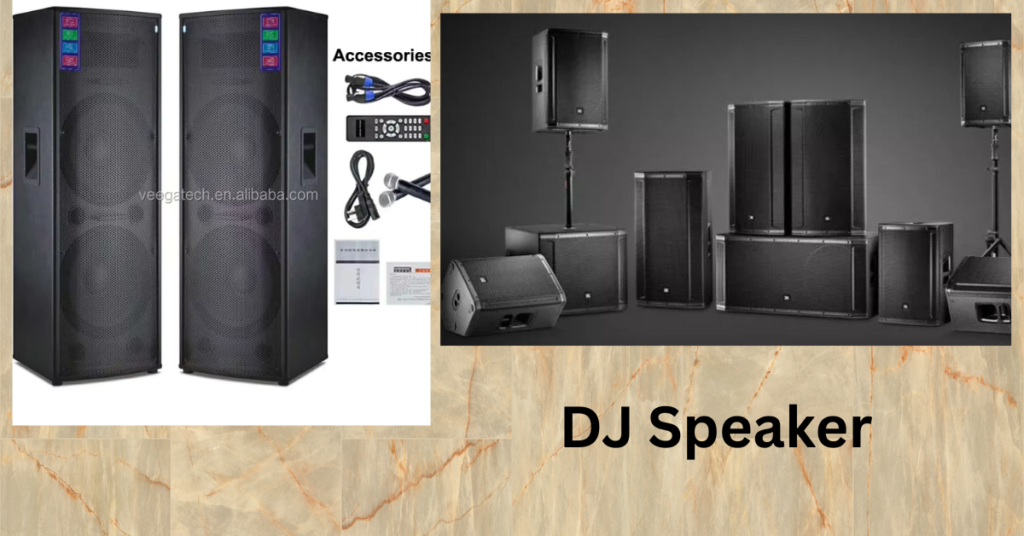
DJ Speaker also known as PA (public address) speakers or sound reinforcement speakers, are essential components of a DJ setup. These speakers are specifically designed to deliver high-quality sound with clarity, power, and reliability, making them suitable for various DJ performances, events, parties, and venues.
2. Exploring Different Types of DJ Sound Systems for Events & Performances
1. Active (Powered) vs. Passive (Non-Powered) Speakers
Active Speakers
These speakers have a built-in amplifier, which means they can be plugged directly into a DJ controller, mixer, or audio interface without needing an external amp.
Pros:
- Easier setup — fewer components and cables.
- Built-in DSP (Digital Signal Processing) in many models allows for better sound tuning.
- More portable for mobile DJs and solo performers.
Cons:
- Slightly heavier due to the internal amp.
- If the built-in amp fails, the whole unit may need repair.
Passive Speakers
These require an external amplifier to power them, often connected through a speaker management system or crossover.
Pros:
- More flexible system design (you can match amps to speaker performance).
- Easier to replace or upgrade individual components.
- Often used in large, permanent club or venue installations.
Cons:
- More complex wiring and setup.
- Requires knowledge of matching amp power and impedance.
2. Subwoofers vs. Full-Range Speakers
Subwoofers
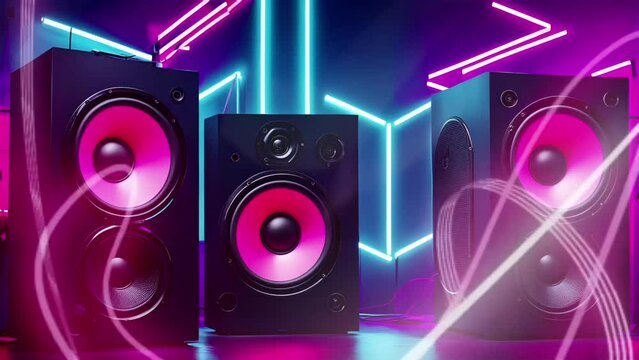
- Definition: Speakers dedicated to reproducing low-frequency sounds, typically in the range of 20 Hz to 200 Hz.
- Purpose: To deliver deep bass that you can feel, especially useful for genres like hip-hop, EDM, techno, and house.
- Use Case: Often used in addition to full-range speakers for a more powerful, club-like sound experience.
- Active or Passive: Available in both powered and passive forms.
Full-Range Speakers
- Definition: These cover the entire frequency spectrum — low, mid, and high — and can function on their own for small- to mid-size venues.
- Purpose: To provide a complete sound experience without needing a separate subwoofer.
- Use Case: Ideal for compact setups or DJs on the move who want minimal gear with solid performance.
- Limitations: While they handle bass, they don’t deliver the chest-thumping low-end that dedicated subs do.
3. Monitors vs. PA Systems
DJ Monitors
- Definition: Smaller speakers placed close to the DJ, used for cueing and monitoring the mix.
- Purpose: To help the DJ hear their output accurately and adjust transitions and effects in real-time.
- Features:
- Flat frequency response for honest sound.
- Near-field design — best listened to at close range.
- Use Case: Not meant to fill a venue but rather to aid the performer behind the decks.
PA (Public Address) Systems
- Definition: Larger speaker systems meant to deliver sound across a large area — such as clubs, halls, outdoor events, and more.
- Purpose: To amplify music so the entire audience hears it clearly and powerfully.
- Components:
- May include full-range tops, subwoofers, and even line arrays for large venues.
- Built for high SPL (sound pressure level) and long-range dispersion.
3. Key Audio Features to Look for in a Pro DJ Speaker Setup
1. Power Output (Wattage)
- Measured in watts (RMS and peak):
- RMS (Root Mean Square): The continuous power a speaker can handle — more important than peak.
- Peak Power: The maximum burst a speaker can output — good to know, but not for continuous play.
- Why it matters: More power = louder sound, but it’s also about clarity at high volume. Ideal wattage depends on your venue size.
2. Frequency Response
- Indicates the range of sounds a speaker can reproduce, typically measured in Hz (low) to kHz (high).
- Example: 45 Hz–20 kHz
- A wider frequency range allows for better reproduction of bass, mids, and treble.
- Subwoofers handle low frequencies, while full-range speakers cover the whole spectrum.
3. Speaker Size
- Refers to the size of the driver (woofer)—common sizes: 8″, 10″, 12″, and 15″.
- Larger drivers = better bass, more volume.
- Choose based on your needs:
- 8″-10″ for small gigs or indoor setups.
- 12″-15″ for large events or outdoor spaces.
4. Build Quality & Portability
- Rugged enclosures (ABS plastic or wood) with metal grilles protect the internals.
- Reinforced handles, mounting options (like pole mounts), and lightweight design are great for mobile DJs.
- Weather resistance is useful for outdoor events.
5. Connectivity Options
- Common inputs:
- XLR (balanced, pro audio standard)
- TRS (1/4″ Jack) and RCA
- Bluetooth (on modern active models)
- Some speakers offer mix controls or built-in mixers for direct connection to mics or controllers.
6. Built-in DSP (Digital Signal Processing)
- Equalization presets for different environments (e.g., “Club,” “Speech,” “Live”).
- Crossover management when using subwoofers.
- Limiter protection to prevent distortion or damage from overpowering.
7. Maximum SPL (Sound Pressure Level)
- Measured in decibels (dB)—the higher, the louder.
- A higher SPL rating means the speaker can deliver more volume without distortion.
- Example: 125 dB SPL is good for large spaces.
8. Cooling System
- Active speakers generate heat, so quality models come with efficient cooling (heat sinks or fans).
- Prevents overheating during long performances.
9. Mounting and Placement Options
- Pole mounts, floor wedges, and fly points allow flexible placement.
- Monitor wedge design lets some speakers double as floor monitors.
10. Aesthetics
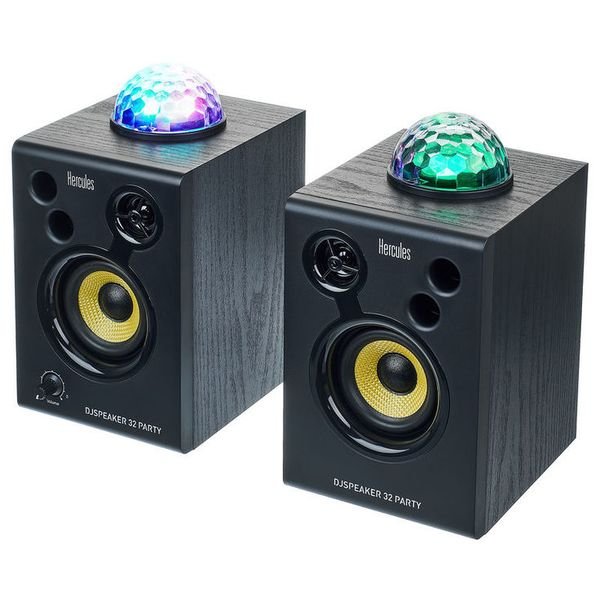
- While not a technical feature, sleek design, LED lighting, or branding can matter for presentation—especially at events or club gigs.
4. Best Brands and Top-Rated Models of DJ Sound Systems
1. Pioneer DJ
- Known For: Premium sound quality, DJ-friendly features, professional aesthetics.
- Popular Models:
- Pioneer DJ XPRS2 Series—High-performance active speakers with DSP, ideal for pro-level gigs.
- Pioneer DM-50D—Great desktop DJ/producer monitors with dual amplifier system (for practice or home studio).
2. JBL (JBL Professional)
- Known For: Rugged, road-ready build and deep bass performance.
- Popular Models:
- JBL EON710 / EON715—Lightweight powered speakers with Bluetooth and DSP.
- JBL PRX ONE—Column PA system with built-in mixer, great for solo performers or small gigs.
- JBL SRX815P—Tour-level power with detailed sound and wireless control.
3. Yamaha
- Known For: Reliable performance, clear and balanced audio, great for all-around use.
- Popular Models:
- Yamaha DXR12mkII—Powerful, clear sound with flexible inputs and DSP.
- Yamaha DZR Series—High-end powered speakers with dynamic clarity and built-in processing.
- Yamaha HS5/HS8—Studio monitors popular with DJs who also produce music.
4. Electro-Voice (EV)
- Known For: Clean sound, modern tech, and high SPL.
- Popular Models:
- EV ZLX-12P/ZLX-15P—Very popular for mobile DJs — affordable and powerful.
- EKX and ELX Series—Stepping up in power and DSP for larger venues.
- ETX Series—Premium line for serious performers needing concert-level output.
5. Mackie
- Known For: Budget-friendly options with strong performance and portability.
- Popular Models:
- Mackie Thump Series (Thump212, Thump215) – Great low-end and built-in mixing.
- Mackie SRM Series—More refined sound and wireless control features.
- Mackie CR-X Monitors—Ideal for bedroom DJs or small practice studios.
5. How to Set Up and Connect DJ Speakers for Maximum Output
1. Placement for Optimal Sound
- Elevate your speakers: Use speaker stands to raise them above the crowd’s ear level (about 5-6 feet off the ground).
- Angle slightly downward: Aim the speakers toward your audience for even sound coverage.
- Avoid corners/walls: Too close to walls or corners can cause unwanted bass buildup.
- Stereo setup: Place your left and right speakers equidistant from the DJ booth, angled inward slightly to create a balanced stereo field.
2. Cables and Connections
- Power Cables: For active (powered) speakers — make sure they’re plugged into reliable outlets.
- Audio Cables:
- XLR cables: Preferred for balanced, noise-free connections from mixer to speakers.
- TRS (1/4” jack): Another balanced option, often interchangeable with XLR.
- RCA: Common in home setups but more prone to interference.
- Mixer to Speakers:
- Connect Master Out from your DJ mixer/controller to the Line In on each speaker.
- Set input levels on your speaker to “Line” if coming from a mixer.
6. What is the best speaker for a DJ?
JBL PRX800 Series – JBL’s high-end powered speaker line, offering excellent sound reproduction and build quality. The PRX812 and PRX815 are two of the most popular models. Yamaha DXR Series – Yamaha’s professional powered speakers deliver impressive sound and reliability. The DXR12 and DXR15 are well-regarded options.
Conclusion
DJ speakers are one of the most critical components of any DJ setup; they are the bridge between your music and your audience. Whether you’re performing at a small house party or rocking a full-scale festival, having the right type of speakers, from active or passive systems to subwoofers and monitors, can make a huge difference in the impact of your performance.
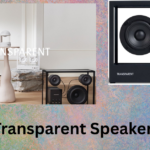
If you’re into sleek aesthetics and pure sound, check out the Transparent Speaker for a unique listening experience.